Zoe Schmid · 4 November 2026
Exploring the Integration of LED Innovations in Coastal Navigation Aids for Enhanced Visibility During Foggy Conditions
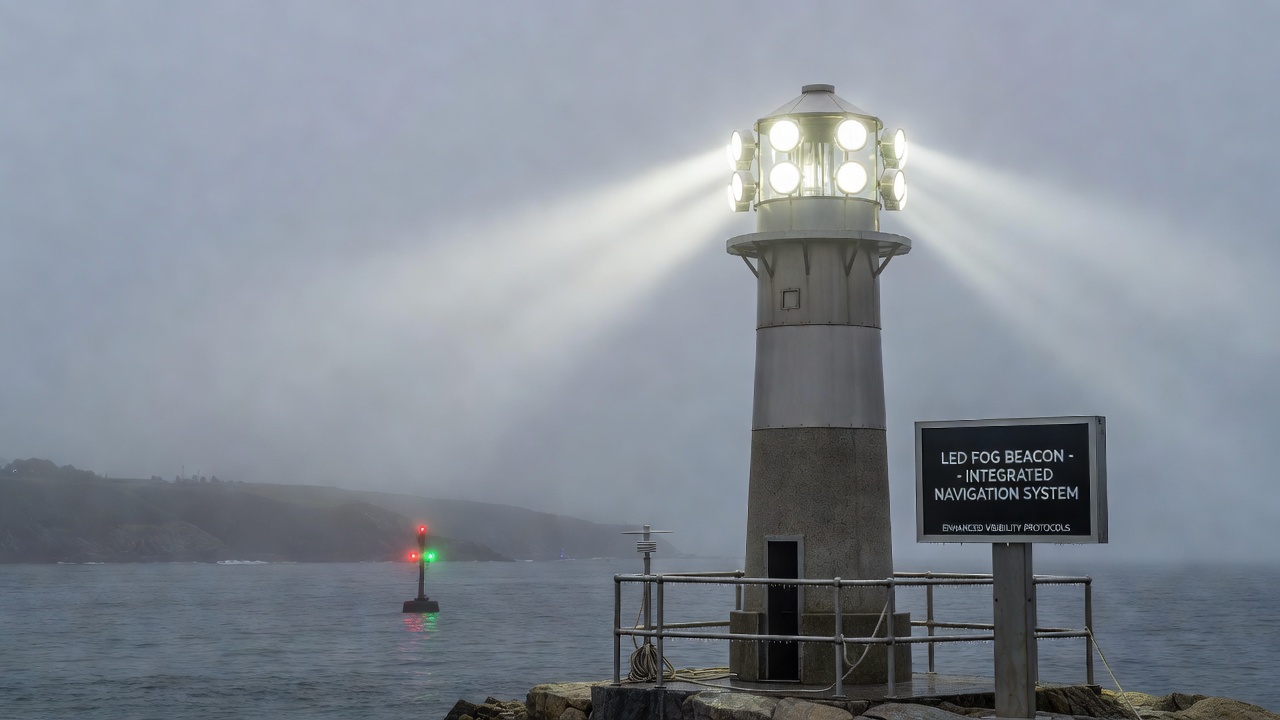
Coastal navigation aids have undergone steady upgrades as operators shift toward LED systems that deliver higher intensity output while cutting power demands in remote installations, and researchers continue to examine how these lights perform when marine fog reduces visual range to fractions of a kilometer. Data collected by maritime agencies show that traditional incandescent and halogen beacons often fall short in scattering conditions because their broader spectrum loses coherence quickly, whereas LED arrays concentrate energy in narrower bands that maintain contrast against water droplets.
Core Technical Shifts in Marine Beacon Design
Engineers have replaced filament sources with arrays of high-power LEDs mounted on heat-sinked platforms, and these configurations reach peak candela levels at lower wattage because the diodes convert electricity directly into visible photons without generating excess infrared waste. Studies from port authorities in the North Sea region document service intervals extending from months to years once LEDs replace older lamps, since solid-state emitters resist vibration damage common on exposed buoys and towers. Observers note that pulse-width modulation allows operators to adjust flash patterns in real time through satellite links, a capability that helps vessels distinguish one aid from another even when multiple lights appear within the same fog bank.
Atmospheric Performance Under Reduced Visibility
Fog attenuates light through Mie scattering, and wavelength selection becomes critical because shorter blue-green spectra disperse more rapidly than longer amber or red outputs; several coastal programs have therefore adopted LEDs centered around 590 nanometers to balance eye sensitivity with penetration depth. Field measurements taken along the Pacific Northwest coastline indicate that LED beacons maintain a usable range 15 to 20 percent farther than equivalent halogen units when meteorological visibility drops below 500 meters, according to reports compiled by Transport Canada. Additional testing incorporates collimating optics that narrow beam spread, which concentrates available lumens along the horizon where mariners most need reference points during approach maneuvers.
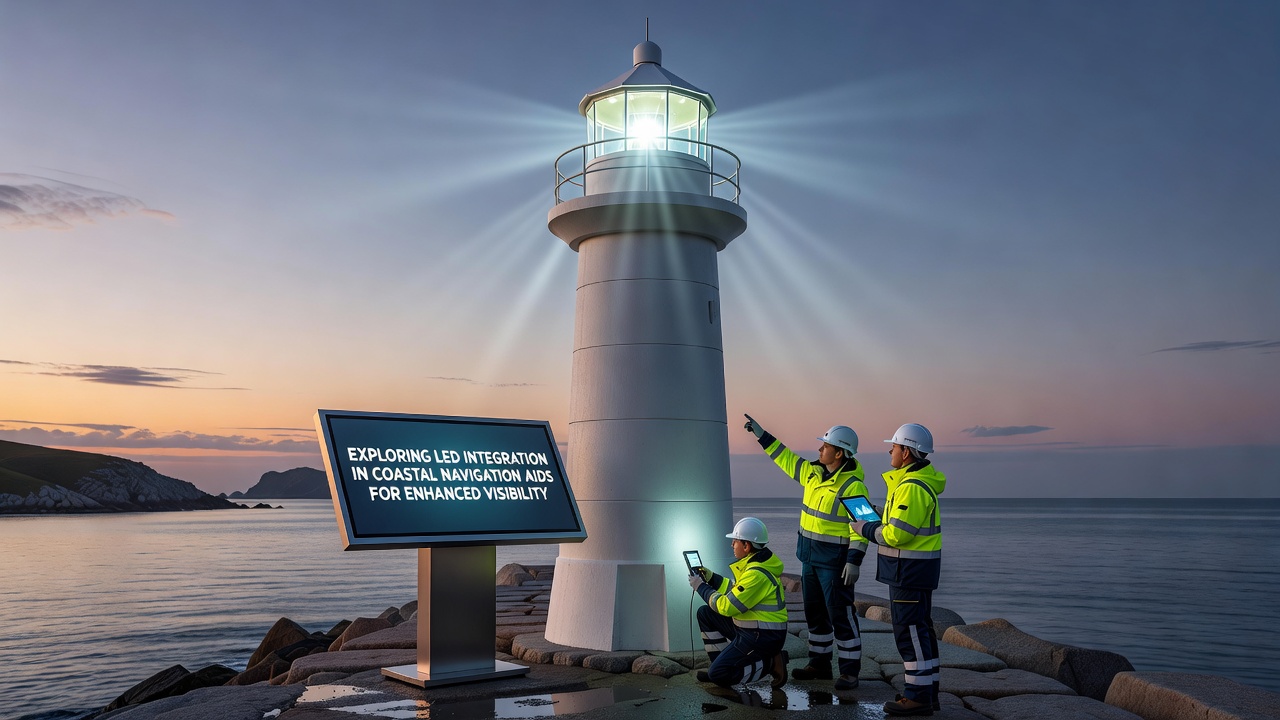
Power budgets shrink dramatically with LEDs, and solar-charged battery banks now sustain continuous operation at sites previously limited by fuel logistics, while integrated sensors monitor lumen depreciation and trigger alerts before output falls below international thresholds. In November 2026, scheduled reviews by the International Maritime Organization will evaluate updated performance criteria that incorporate these measured gains, and several member states plan to align their national standards accordingly.
Deployment Examples Across Different Regions
Australian Maritime Safety Authority crews have retrofitted more than 180 aids along the Great Barrier Reef with LED clusters that include automatic intensity scaling tied to visibility sensors, and logs from those installations show reduced vessel groundings during seasonal fog events. European operators working in the Baltic have paired LED lanterns with radar transponders so that electronic charts display both optical and radio signatures, creating layered redundancy when visual acquisition becomes unreliable. One study conducted by the University of Southampton examined scatter patterns across 12 different LED spectra and found that hybrid arrays combining amber and near-infrared emitters improved detection distances for both human observers and low-light cameras used on modern bridges.
Maintenance crews report fewer emergency callouts because diode failure rates remain low even after thousands of hours in salt-laden air, and modular designs let teams swap entire light heads without disturbing the supporting structure. Data from the U.S. National Data Buoy Center further confirm that energy consumption per flash cycle has dropped by roughly 60 percent in LED conversions, freeing budget for additional sensor packages that track sea state and transmit real-time corrections to nearby traffic.
Integration With Broader Maritime Systems
Modern LED aids feed into Vessel Traffic Services networks that correlate light status with Automatic Identification System tracks, and this linkage allows controllers to issue targeted warnings when an aid dims unexpectedly during fog. Regulatory frameworks in Canada and Australia now require documented photometric testing every 24 months for LED units, a schedule that replaces older subjective visual checks with calibrated meters carried aboard inspection vessels. Those protocols also specify minimum color rendering indices to ensure that mariners wearing tinted glasses or using night-vision equipment can still recognize the intended signal color.
Conclusion
LED integration continues to reshape how coastal authorities maintain reliable reference points when fog blankets approach channels, and the combination of spectral optimization, reduced power draw, and remote diagnostics supports longer service lives at lower operating cost. Ongoing measurements from multiple agencies supply the evidence base for future standard revisions, while regional programs demonstrate measurable improvements in detection range and system uptime that directly affect safe passage for commercial and recreational traffic alike.